The Minivan Headroom Problem Nobody Warns Tall Moms About Before Buying
Quick Answer: Minivan headroom and seat-track length specs vary significantly by model and aren’t always listed clearly, so a tall mom can end up with her head brushing the roof or the seat maxed out on its rearward track before she’s actually comfortable — checking specific headroom numbers before buying prevents this.
You test-drove it once at the dealership, it felt fine for ten minutes, and now every daily commute has you hunching slightly to see the mirrors clearly. That’s not something you have to just live with.

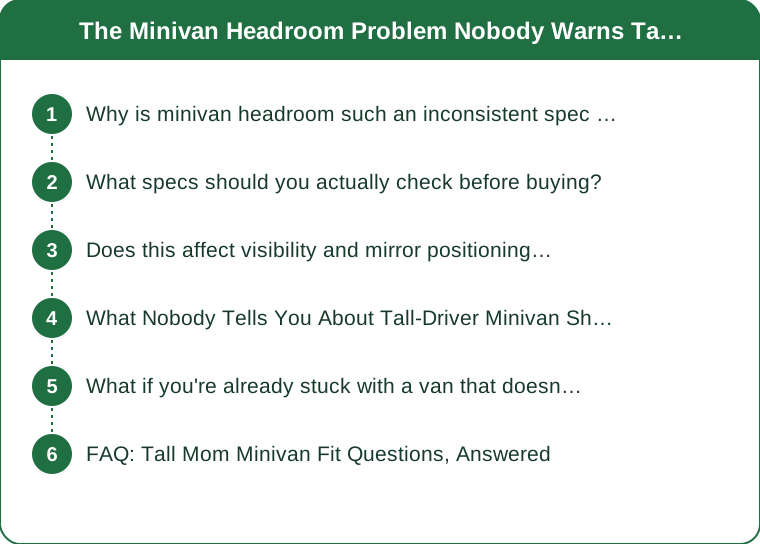
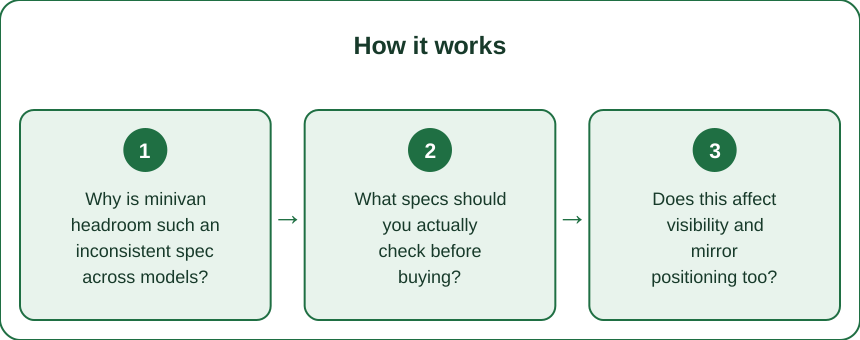
Why is minivan headroom such an inconsistent spec across models?
Manufacturers design rooflines around average seated height plus a standard clearance margin, and that margin varies more between models than most buyers expect — some vans have noticeably higher rooflines specifically over the front seats, while others prioritize a lower profile for aerodynamics or styling. The published ‘headroom’ number in inches is real, but it’s easy to overlook when comparing models mainly on cargo space or safety ratings.
Seat height adjustment range also varies — some models let you drop the seat significantly lower, effectively creating more headroom, while others have a more limited range that leaves taller drivers with fewer options.
What specs should you actually check before buying?
The front headroom measurement in inches (published in most manufacturer spec sheets) is the most direct number to compare across models — anything under about 40 inches tends to feel tight for drivers over 5’9”-5’10”. Seat track length (how far back the seat travels) matters just as much, since a van with generous headroom but a short seat track can still leave a tall driver too close to the wheel.
Sitting in the vehicle with the seat all the way back and down, then checking if there’s still a few inches of clearance above your head, is a more reliable test than the number alone, since posture and hairstyle affect how the same headroom number feels in practice.
Does this affect visibility and mirror positioning too?
Yes — when a tall driver has to sit with the seat higher than ideal to compensate for limited legroom or reach to the pedals, mirror angles and sightlines over the dashboard shift too, sometimes creating blind spots that a shorter driver wouldn’t experience in the same vehicle. This is a safety consideration, not just a comfort one.
A seat that doesn’t recline or lower enough can also push a tall driver’s line of sight too close to the top of the windshield frame, which becomes more noticeable in vehicles with a lower roofline or larger dashboard displays.

What Nobody Tells You About Tall-Driver Minivan Shopping
Reviews and buying guides rarely break out headroom specifically for tall drivers — most van comparisons focus on third-row legroom and cargo volume, since that’s what family buyers search for, leaving the front-seat headroom question buried in spec sheets that require some digging.
It’s also rarely mentioned that sunroof-equipped trims often have less headroom than base trims on the same model, since the sunroof housing eats into the roofline clearance — worth checking specifically if you’re cross-shopping trims on the same van.
What if you’re already stuck with a van that doesn’t fit well?
An aftermarket seat cushion wedge can sometimes help with reach to pedals without raising your head closer to the roof, effectively changing your position without losing headroom. Adjusting mirror angles more aggressively and getting used to a slightly different sightline is a workable interim fix if replacing the vehicle isn’t realistic right now.
For future purchases, test-driving with the seat in your actual daily-driving position (not the dealership default) for at least 15-20 minutes reveals headroom and comfort issues that a quick test drive often misses.
FAQ: Tall Mom Minivan Fit Questions, Answered
Which minivan models are generally better for tall drivers?
Headroom varies by model year and trim, so it’s worth checking the current model year’s published specs directly rather than relying on general reputation, since manufacturers redesign rooflines between generations.
Does removing the sunroof help with headroom?
No — the sunroof housing is built into the roof structure, so it can’t be removed to gain headroom even on trims where it’s not in use.
Is an SUV usually better than a minivan for headroom?
Not automatically — headroom varies just as much between SUV models as minivans, so the same spec-checking approach applies regardless of vehicle type.
TL;DR:
- Minivan headroom and seat track length vary more between models than most buyers expect
- Check the published front headroom spec and test the actual seat track range before buying
- Sunroof trims often have less headroom than base trims on the same model
- Test-drive in your real daily position for 15+ minutes, not just a quick dealership loop
A cramped daily commute isn’t something to just adjust to — a few extra minutes comparing specs before buying (or a small cushion fix after) makes a real difference.
Keep Reading
This article is for general informational and styling purposes only. Fit, sizing, and product availability may vary.
