Why the Car Seat Is the Worst Lift in a Tall Parent's Day
Quick Answer: Every principle of safe lifting — load close to the body, feet under the load, spine neutral, no twisting — is impossible to follow at a car door. For a taller parent the reach is longer and the roof is lower, so you bend further and twist more. It is not the weight of the child that causes the problem; it is the geometry, repeated eight to twelve times a day.
You can deadlift considerably more than your toddler weighs.
And it is the car seat that leaves your back aching by Thursday.
Why is this specific movement so bad?
Because it violates every mechanical principle at once, and does so under a low roof.
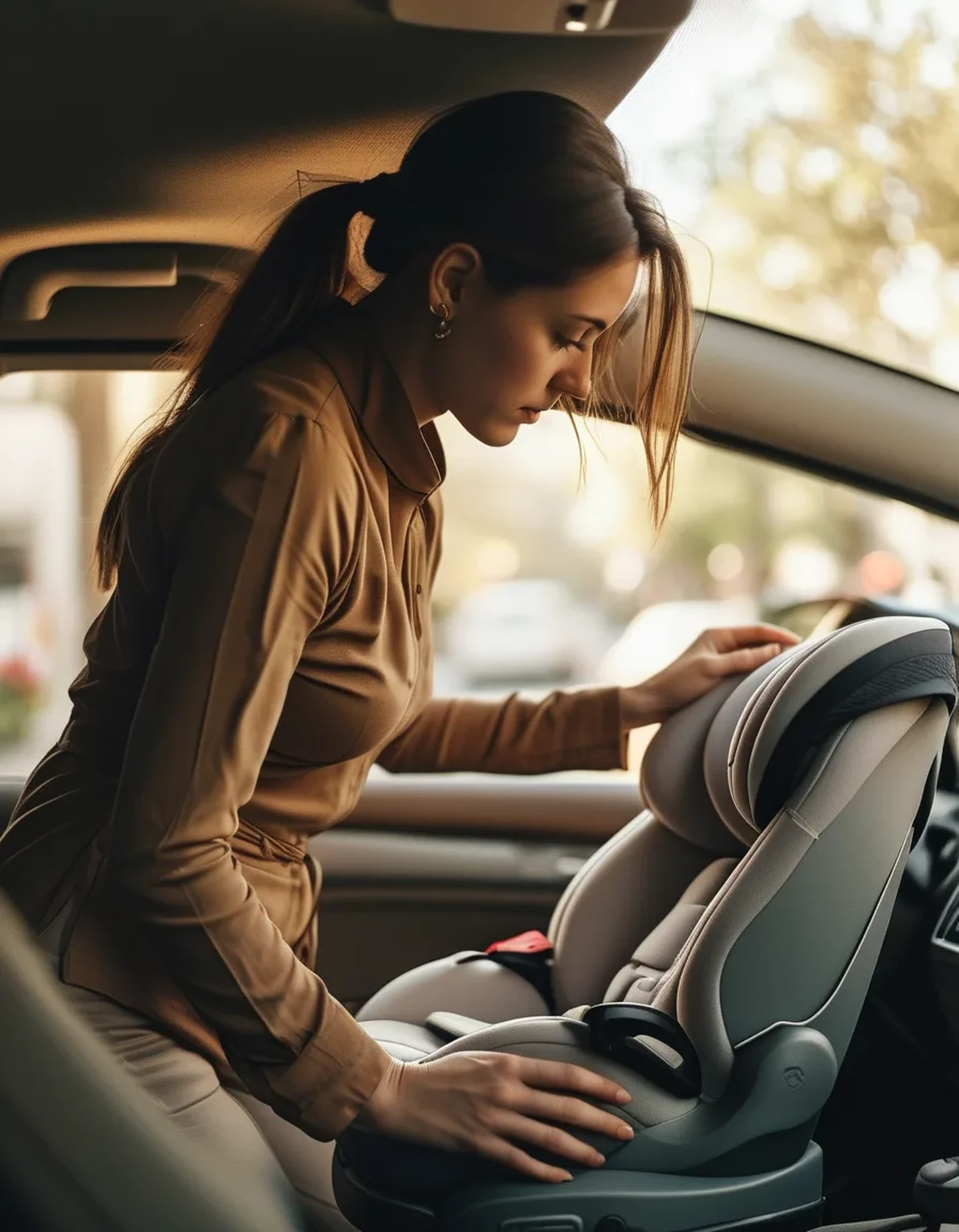
The load is far from your body. Spinal load rises roughly in proportion to the horizontal distance between the load and your spine. A 13kg toddler held at arm’s length across a car seat generates several times the spinal load of the same child held against your chest. This is the dominant factor and it is entirely geometric.
You cannot get your feet under the load. Safe lifting depends on positioning yourself over the object. The car door, the sill and the seat itself make that impossible — you are always reaching across something.
You are flexed and rotated at the same time. The combination of forward bending and twisting under load is the specific pattern most associated with disc injury, and it is unavoidable here: you reach in facing forward, then rotate to position the child, then rotate back.
Your neck is compromised by the roof. For a taller parent, the car roof forces additional neck and upper back flexion just to get your head in, which removes any chance of a neutral spine.
And you do it holding a fixed, awkward load. A wriggling child cannot be gripped optimally, and the load moves unpredictably mid-lift, which means your trunk muscles are responding rather than bracing.
Tall parents get a worse version of all five. More distance to reach across, more flexion required to clear the roof, and a longer lever arm from hip to hands — which means the same child produces more spinal load on a taller frame than on a shorter one.
What actually helps at the car?
Changing the geometry, because the technique cannot be fixed while the geometry is wrong.
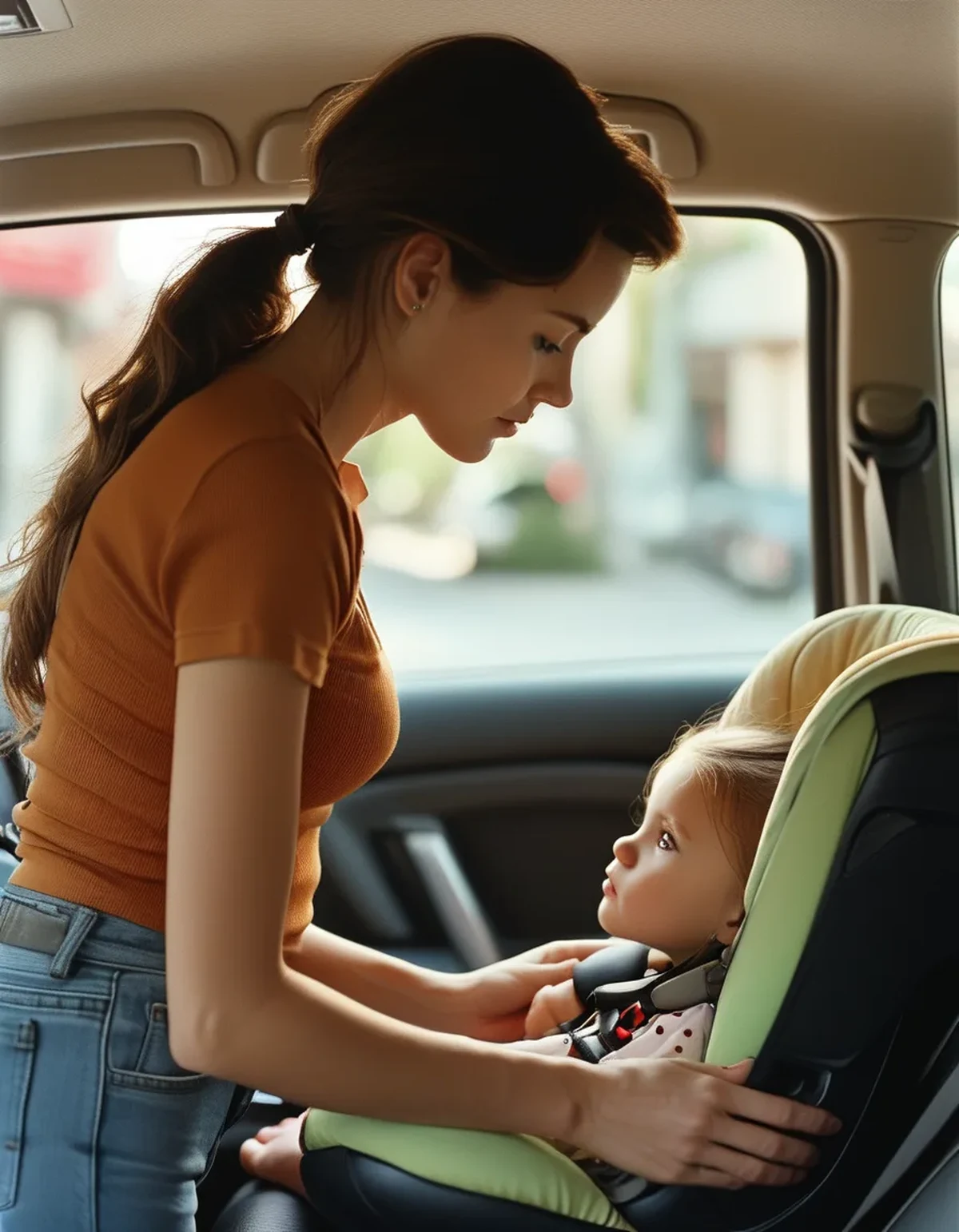
Open the door fully and get one knee onto the seat. This is the single biggest improvement available. Kneeling on the seat brings your body inside the car, which shortens the reach dramatically and lets you face the child seat directly rather than across it. It looks less dignified and it roughly halves the load.
Position the child seat behind the front passenger seat, not in the centre, unless there is a specific reason otherwise. Centre positions have safety arguments in their favour, but the reach is considerably longer — worth weighing deliberately rather than by default.
Slide the front seat forward to create room to get your body in. A tall parent needs the front seat further forward than a shorter one, and it takes two seconds.
Face the seat squarely before you lift, not after. Turn your whole body, feet included. The twist is what does the damage, and it can be eliminated by moving your feet rather than your spine.
Bring the child close before you lift them out. Reach in, get them against your chest, then lift. Most people lift first and bring close second, which is exactly backwards.
Use the door frame. A hand on the frame to support some of your body weight while you reach with the other arm meaningfully reduces the load on your lower back. This is what experienced parents do without noticing, and it is worth doing on purpose.
And teach independence early. A child who can climb into their own seat while you supervise removes the lift entirely, and most children can do this considerably earlier than we let them.
5 Mistakes Tall Parents Make Around the Car
1. Lifting from outside the door. The default, and the worst option. Getting a knee on the seat feels excessive for a two-second job, and it is the difference between a neutral spine and a fully flexed rotated one.
2. Holding the bag while lifting the child. Extremely common, and it adds an asymmetric load to an already asymmetric lift. Put the bag down, or in the car first. Always.
3. Doing the buckle from a half-standing crouch. The buckling is often longer than the lift, and a static held position at the limit of your reach is where most people actually feel the strain. Kneel or sit on the seat edge for it.
4. Choosing a low car. For tall parents specifically, a car with a higher seat position makes every single one of these movements easier, and it is the sort of thing nobody considers when buying. A higher hip point means less flexion and a much shorter reach down.
5. Always using the same side. Almost everyone loads from the same door every time, which means the same asymmetric pattern thousands of times. Alternating where practical will not fix a bad lift, and it does stop one side taking all of it.
And worth adding: rushing. The version of this lift done in a hurry in the rain, one-handed, with a bag on the shoulder, is the one that produces the acute episode. The technique costs about four seconds; the episode costs weeks.
What about the rest of the daily loading pattern?
The car seat is the worst single movement, and it sits inside a broader pattern worth addressing together.
The pushchair, the cot, the bath and the kitchen sink are all height-related problems for tall parents, and all four are fixable — adjustable pushchair handles, dropping the cot base to the lowest setting only when necessary, kneeling for bath time rather than bending, and a small platform or a different work surface for the sink.
Build some capacity rather than only reducing load. Deadlifts, farmer’s carries and suitcase carries build exactly the trunk and hip strength that these repeated awkward lifts demand. Parents often assume that carrying children all day counts as strength training; it is closer to endurance work at a load your body has adapted to, and it does not build the reserve that the awkward lifts require.
Address the thoracic spine specifically. Long hours of forward-bent carrying, feeding and lifting produce stiffness through the upper back that then forces the lower back to do more of the bending. Ten minutes of thoracic rotation and extension work a few times a week is disproportionately effective.
Change the shoes. A great deal of parental lifting happens in unsupportive shoes on a driveway, which is a small factor that becomes real over years.
And take the warning signs seriously. General information rather than medical advice: back pain that radiates down a leg, that comes with numbness, tingling or weakness, or that follows a specific sudden episode is different from ordinary end-of-week stiffness, and it warrants assessment rather than a stretching video. The same applies to any pain that wakes you at night or is not improving after a couple of weeks.
FAQ: Tall Parents and Lifting, Answered
Is a booster or a different seat model easier to load?
Often yes, and it is rarely considered. Seats vary considerably in how far the harness sits from the door, how easy the buckle is to reach, and whether they rotate. A rotating car seat is a genuinely significant ergonomic improvement for a tall parent and worth the cost if you are loading a child several times a day.
My back only hurts on days I drive. Is that the car seat or the driving?
Possibly both, and the driving position is worth checking independently. Tall drivers commonly sit with the seat far back and the wheel far forward, which produces a slumped position with a rounded lower back for the length of the journey — and a spine held flexed for forty minutes is much more vulnerable to the loading that comes immediately afterwards at the car door.
At what age can a child get in themselves?
Many can climb into a car and into their seat somewhere around two and a half to three, with supervision and a stable surface, though it varies enormously. Buckling remains an adult job for considerably longer for safety reasons. Encouraging the climb while you handle the harness removes the single worst part of the movement while keeping the safety-critical part with you.
TL;DR:
- The car seat combines a long reach, forward bending, rotation and a moving load with no way to get your feet under it — and tall parents get a longer lever on all of it.
- Get a knee on the seat: it roughly halves the spinal load and is the single biggest available fix.
- Face the seat squarely, bring the child close before lifting, use the door frame for support, and put the bag down first.
- Consider seat position, front-seat position, a higher car and a rotating car seat as genuine ergonomic decisions.
- Build capacity with carries and hip hinge work, and treat radiating pain, numbness or weakness as a reason to get assessed.
What makes this movement so persistent is that it is quick, routine and involves a load you know you can handle — which is exactly the profile of the lifts that cause problems. Four extra seconds and one knee on the seat is a genuinely disproportionate return.
Keep Reading
This article is for general informational and styling purposes only. Fit, sizing, and product availability may vary.
